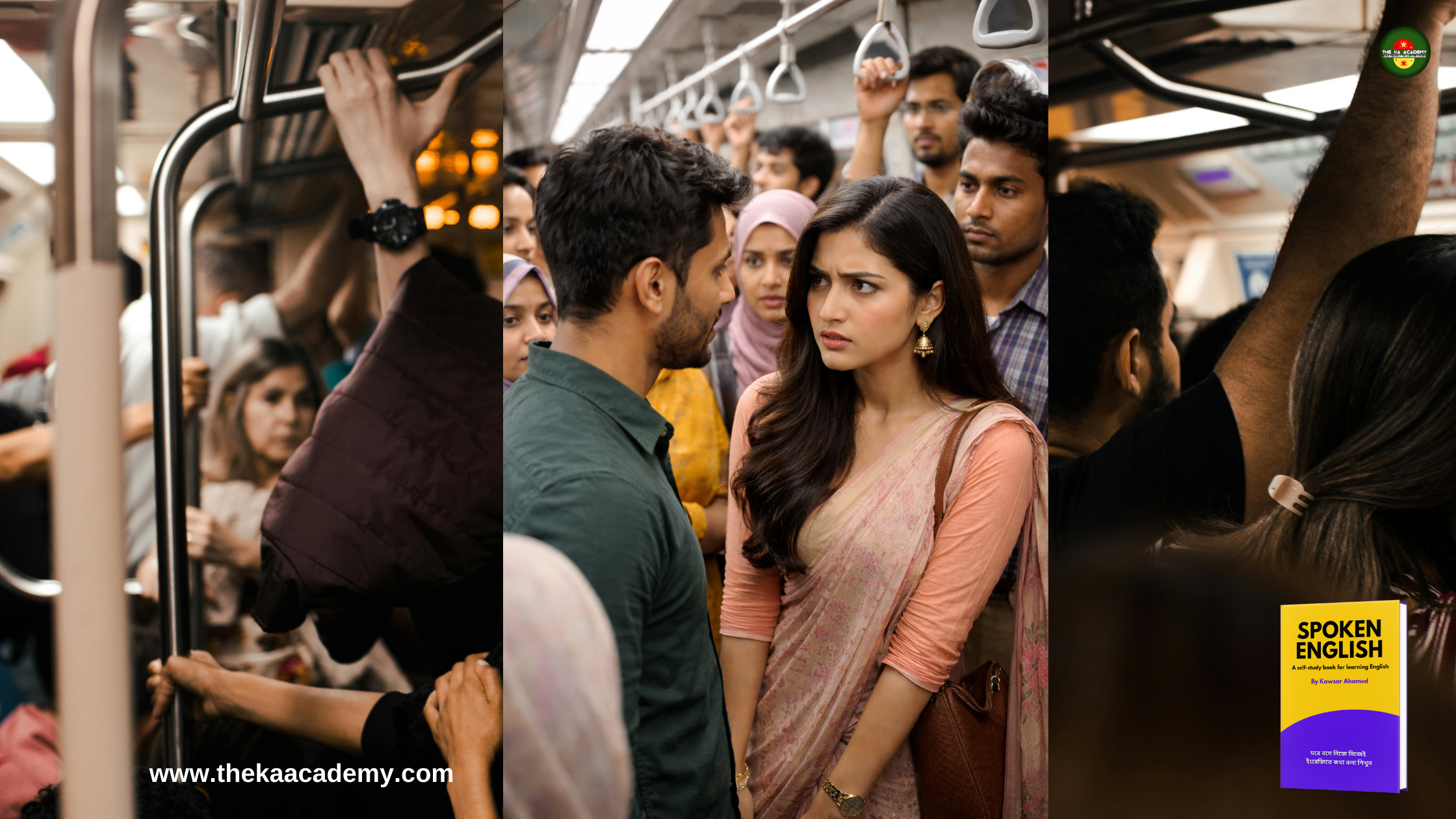
The poem Changing Attitudes explores the shift in societal behavior toward women in public spaces, particularly highlighting the decline of chivalry and compassion. It contrasts the past, when men would willingly offer their seats and help women, with the present, where indifference has become common.
The poem describes a chaotic metro scene in which men, trying to board the train, end up trapped in a compartment reserved for women. The women block their exit and later take pride in the incident by posting about it on social media, without acknowledging the men’s suffering. This situation reflects a broader social change where kindness and mutual support between genders have declined, creating competition instead of cooperation. The poem ultimately calls for a return to kindness and connection, emphasizing compassion as essential for unity.
Literary Analysis
The poem Changing Attitudes reflects the changing dynamics of gender relations in public spaces, using the busy setting of a metro station. Through contrast and strong imagery, the poet presents the shift in social attitudes toward courtesy and empathy.
Structure and Tone
The poem follows a rhythmic flow that reflects the chaos of a crowded metro. Its tone is both conversational and reflective, encouraging readers to think about the consequences of changing attitudes. The use of enjambment creates a sense of movement and urgency, similar to the motion of the train.
Themes
1. Chivalry and Compassion The poem begins by recalling a time when men offered their seats to women, representing respect and care. This idea is contrasted with the present situation, showing a decline in kindness and empathy.
2. Gender Dynamics The metro incident shows how a shared public space turns into a place of conflict. The women’s refusal to let the men exit the compartment symbolizes a social shift toward superiority, self-interest, and competition.
3. Social Commentary By showing how the incident is celebrated on social media, the poem criticizes modern culture’s tendency to support divisive behavior. Public approval becomes more important than empathy or dignity.
Imagery and Symbolism
Metro chaos represents society under pressure, where human behavior becomes tense and impersonal.
Closed doors symbolize barriers to understanding and communication.
Social media reflects performative behavior, where validation replaces genuine human connection.
Conclusion
In conclusion, Changing Attitudes urges readers to reflect on a society that increasingly values competition over compassion. The poem calls for the revival of kindness and mutual respect, presenting both a criticism of modern attitudes and a hopeful appeal for human connection.